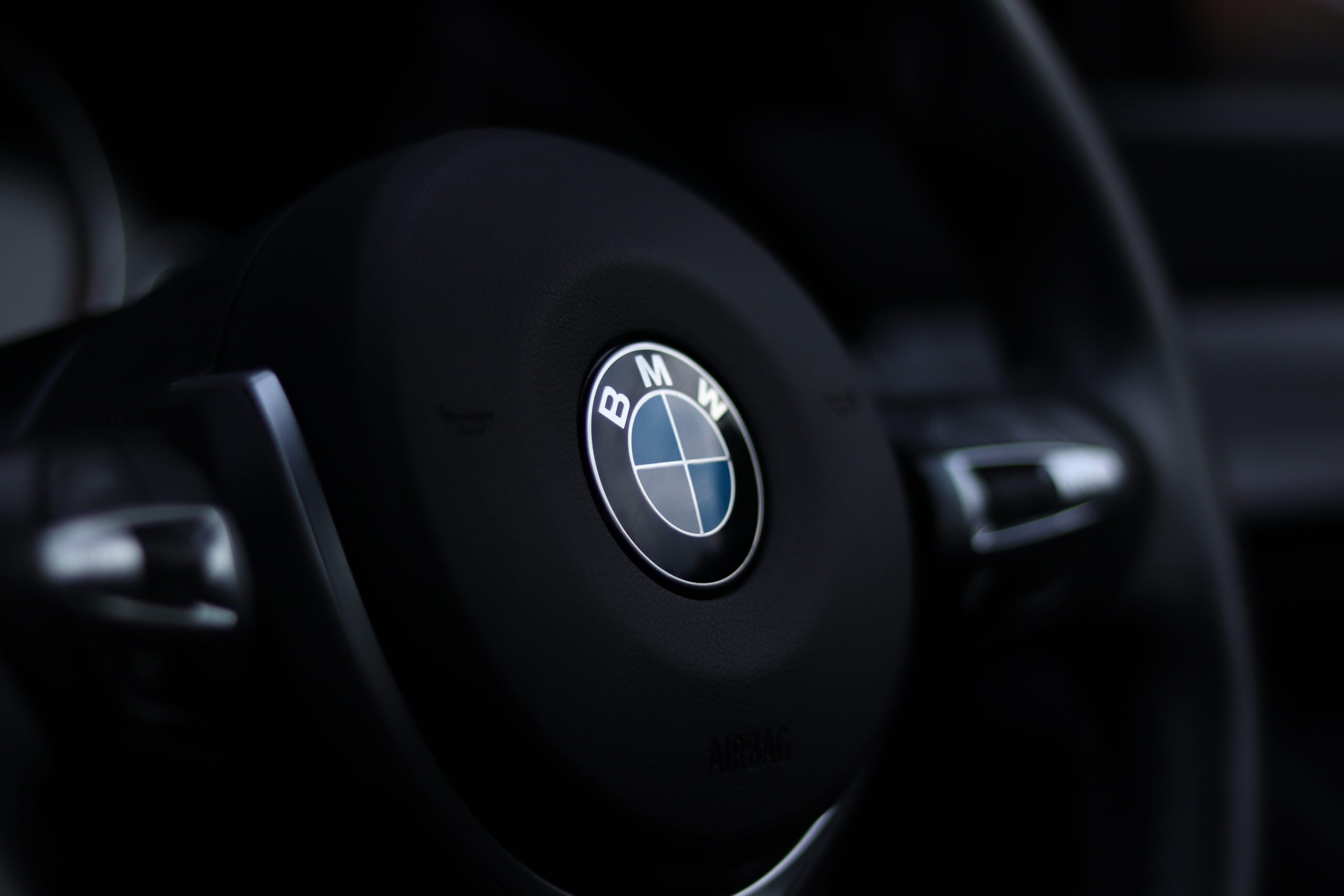
BMW traces its roots to Germany and has grown from an aircraft-engine business into one of the world’s best-known premium automobile manufacturers. The company became an important part of India’s luxury-car market after BMW India began operations in 2007, with the BMW Group Plant Chennai starting production on 29 March that year.
The Chennai facility, located in Chengalpet, Tamil Nadu, has played an important role in BMW’s Indian operations. The plant has expanded considerably since its early years and currently produces a range of BMW and MINI models for the Indian market. BMW says the Chennai plant currently locally produces 12 models, including the 2 Series Gran Coupe, 3 Series Long Wheelbase, 5 Series Long Wheelbase, 7 Series Long Wheelbase, X1, X3, X5, X7, M340i, iX1 Long Wheelbase and i5 Long Wheelbase, along with the MINI Countryman.
BMW’s Indian lineup has also changed significantly. What was once largely associated with executive sedans has developed into a much broader range covering compact luxury cars, long-wheelbase sedans, SUVs, performance models and electric vehicles.
For buyers, however, choosing a BMW is about more than simply looking at the badge or the starting price. A buyer needs to consider the type of driving they do, rear-seat requirements, petrol versus diesel versus electric powertrains, expected running costs, service support and how long they intend to keep the vehicle.
BMW’s traditional appeal comes from its focus on driving dynamics, but the current range is not built around one type of buyer. The X1 LWB is aimed at customers who want a relatively compact luxury SUV with additional cabin space, while the 3 Series LWB combines driving appeal with the practicality expected by Indian rear-seat passengers. Larger models such as the X5, X7 and 7 Series move further towards luxury, space and long-distance comfort. The electric range adds another option for buyers who want premium mobility without a conventional petrol or diesel engine.
This guide looks at BMW cars in India from a buyer’s perspective, including the current lineup, approximate starting prices, powertrain choices, ownership considerations, advantages, limitations and the type of buyer each model makes sense for.
BMW’s current India range includes sedans, SUVs, electric models and high-performance M cars. Prices can change because BMW lists ex-showroom prices that are subject to change and excludes items such as road tax, RTO charges, insurance and other statutory costs.
BMW Model
Body Style
Starting Price*
Best Suited For
BMW 2 Series Gran Coupe
Sedan/Coupe-style
₹45.80 lakh
First-time luxury buyers
BMW X1 LWB
SUV
₹49.90 lakh
Urban families
BMW 3 Series LWB
Sedan
₹62.70 lakh
Driving enthusiasts and executives
BMW X3
SUV
₹76.20 lakh
Premium family SUV buyers
BMW 5 Series LWB
Sedan
₹76.60 lakh
Executive and rear-seat comfort
BMW X5
SUV
₹96.90 lakh
Luxury family SUV buyers
BMW 7 Series
Luxury Sedan
₹1.95 crore
Chauffeur-driven luxury
BMW X7
Large Luxury SUV
₹1.334 crore
Large families and luxury SUV buyers
BMW i5 LWB
Electric Sedan
₹79.60 lakh
Premium EV buyers
BMW iX1 LWB
Electric SUV
₹52.70 lakh
Buyers moving into electric luxury SUVs
*Starting prices are based on BMW India’s current listed prices and can change. Actual on-road prices vary by location, variant, options, taxes and insurance.
BMW also sells higher-performance M models and other specialised vehicles, so the table above should be viewed as a selection of the main models rather than an exhaustive list of every BMW variant sold in India.
BMW X1 LWB: A Practical Entry into the Brand
The X1 has traditionally been one of BMW’s more accessible models in India, but the current X1 LWB puts greater emphasis on interior space and everyday usability.
BMW lists the X1 LWB from ₹49.90 lakh. The company specifically highlights its spacious cabin, technology and everyday versatility. The model is available with petrol and diesel options, depending on the version.
For a buyer moving from a premium hatchback, sedan or mainstream SUV, the X1 can be easier to live with than a larger BMW SUV. Its SUV body style gives a familiar driving position, while the long-wheelbase configuration gives Indian families additional emphasis on rear-seat space.
The X1 is particularly suitable for buyers who spend most of their time in cities but still want a premium vehicle for highway trips.
The main point to consider is that the X1 does not provide the same level of size, performance or luxury as an X5 or X7. It is better viewed as an entry point into BMW ownership rather than a smaller replacement for the company’s flagship SUVs.
BMW 3 Series LWB: Driving Appeal with More Rear Space
The 3 Series has long been associated with BMW’s driving-focused identity. In India, the Long Wheelbase version adds another dimension by giving greater attention to rear-seat comfort.
BMW currently lists the 3 Series LWB from ₹62.70 lakh. The company highlights the model’s increased wheelbase and spacious cabin, making it particularly relevant to the Indian market where many luxury sedan buyers also spend considerable time in the rear seat.
For an owner who drives personally, the 3 Series remains an interesting middle ground. It has the proportions of an executive sedan without becoming as large and expensive as the 5 Series or 7 Series.
It can make sense for someone who wants a luxury sedan for daily driving but does not want to give up the involvement associated with BMW’s smaller sedans.
Before buying, however, it is worth deciding how important rear-seat comfort is compared with driving involvement. If the car will mostly be chauffeur-driven, a larger model may make more sense.
BMW X3: The Middle Ground in the SUV Range
The X3 occupies an important position between the compact X1 and larger X5.
BMW currently lists the X3 30 xDrive from ₹76.20 lakh, while the diesel version is listed separately from ₹78.20 lakh. The X3 combines SUV practicality with BMW’s focus on driving dynamics and is available with petrol and diesel powertrains.
The X3 is worth considering when the X1 feels too small but the X5 feels unnecessarily large or expensive.
It provides enough space for family use while remaining manageable for everyday driving. The availability of xDrive all-wheel drive is another consideration for buyers who regularly travel on highways, rougher roads or through changing weather conditions.
The X3 is also one of the BMW models where the buyer needs to pay close attention to the exact variant. Features, drivetrain, wheels and optional equipment can have a noticeable effect on the final price.
BMW 5 Series LWB: More Focus on Luxury
The 5 Series sits above the 3 Series and places greater emphasis on executive comfort while retaining BMW’s performance-oriented character.
The current 5 Series Long Wheelbase starts at ₹76.60 lakh according to BMW India. Its longer body and spacious interior make it particularly relevant for buyers who frequently travel in the rear seat.
Compared with the 3 Series, the 5 Series feels more appropriate when the car is expected to serve as both a personal luxury sedan and an executive vehicle.
It is also a model where equipment and comfort become increasingly important. Buyers should compare the standard features of the chosen variant rather than judging the car solely by its starting price.
For someone who enjoys driving but also wants a more relaxed and spacious luxury sedan, the 5 Series occupies a different role from the more compact 3 Series.
BMW X5: A Luxury SUV for Families
The X5 is one of BMW’s most important premium SUVs. It offers substantially more road presence and cabin space than the X3 while remaining smaller and less imposing than the X7.
BMW currently lists the X5 from ₹96.90 lakh for the petrol version and ₹98.90 lakh for the diesel version.
The X5 makes more sense for buyers who regularly travel with family, carry luggage or spend considerable time on highways. Its size also gives it a more substantial luxury-SUV feel than the X1 or X3.
However, larger dimensions can become a consideration in crowded cities. Parking spaces, narrow roads and running costs should all be considered before buying.
The X5 is therefore less about finding the cheapest way into BMW ownership and more about deciding whether the additional space, equipment and presence justify moving up the range.
BMW X7: Maximum SUV Space
The X7 sits near the top of BMW’s SUV range in India and is designed for buyers who want a large luxury SUV with three-row practicality.
BMW India lists the X7 from ₹1.334 crore. Petrol and diesel versions are available in the current range.
Its appeal is straightforward: more space, a larger cabin and a substantially more imposing presence than the smaller X models.
For a large family, the third row can be an important reason to consider the X7. However, buyers should realistically assess how often they need three-row seating. If the third row will rarely be used, an X5 may provide enough space without moving so far up the price ladder.
BMW 7 Series: Flagship Luxury Sedan
The 7 Series represents BMW’s flagship sedan experience in India.
BMW currently lists the 7 Series from ₹1.95 crore. The model focuses heavily on rear-seat luxury, technology, comfort and premium materials while retaining BMW’s performance-oriented engineering approach.
This is a very different proposition from the 3 Series. A 7 Series buyer is generally looking beyond basic transportation and is paying for a combination of space, technology, luxury and brand positioning.
For chauffeur-driven use, rear-seat features become particularly important. For owner-driven use, the buyer may instead place greater importance on performance and handling.
At this price level, buyers should also compare the complete ownership package, including warranty, service plans, insurance and replacement costs.
BMW Electric Cars in India
BMW’s electric portfolio has become a more important part of its Indian range.
Current BMW India listings include the iX1 LWB and i5 LWB, while BMW also offers higher-end electric models such as the i7 and iX. BMW’s website currently lists the iX1 LWB from ₹52.70 lakh and the i5 LWB from ₹79.60 lakh.
The advantage of choosing an electric BMW is not simply lower fuel consumption. The driving experience is different because electric motors deliver power immediately and operate more quietly than conventional engines.
However, an EV requires a different ownership routine. Home charging access can make a major difference, particularly for buyers who drive frequently. Public charging availability, charging time, daily driving distance and long-distance travel plans should all be considered before choosing an electric BMW.
For buyers who have convenient home charging and predictable daily usage, an electric BMW can be a practical alternative to a petrol or diesel luxury car.
Petrol, Diesel or Electric: Which BMW Powertrain Makes Sense?
There is no single powertrain that suits every BMW buyer.
Petrol is a straightforward choice for buyers who want smooth performance and use the vehicle for a mixture of city and highway driving. It can also suit owners who do not drive enough kilometres annually to justify choosing a diesel.
Diesel can make sense for buyers who cover high annual distances, particularly on highways. BMW continues to offer diesel versions of models including the X1, X3, X5 and X7.
Electric is worth considering when the buyer has reliable charging access and wants a quieter driving experience with electric performance.
Instead of choosing based only on fuel economy, calculate your expected annual kilometres, typical journey length, charging access and ownership period.
BMW Ownership Costs in India
The purchase price of a BMW is only the beginning of the ownership calculation.
Insurance can be considerably higher than for mainstream cars, while tyres and replacement parts can also add substantially to running costs. Optional equipment can increase the purchase price, and larger wheels can also affect tyre replacement expenses.
Service and warranty packages deserve particular attention. BMW India currently advertises service packages and financing offers for selected models, but the exact benefits can vary by model and offer period.
Before signing the purchase agreement, buyers should ask the dealer for:
Scheduled service costs
Warranty duration and coverage
Extended warranty pricing
Service package pricing
Insurance cost
Tyre replacement cost
Roadside assistance coverage
Cost of commonly replaced parts
Waiting time for parts, if applicable
This gives a much more realistic picture of ownership than looking only at the ex-showroom price.
BMW Safety and Technology
Modern BMW models offer a wide range of driver-assistance and parking technologies, although the exact equipment depends on the model and variant.
For example, BMW highlights features such as Driving Assistant Plus and Parking Assistant Plus on the X3. These systems can provide assistance with functions such as adaptive cruise control, lane keeping and automated parking, depending on the vehicle configuration.
Buyers should therefore check the equipment list for the exact variant they intend to purchase rather than assuming that every feature shown in BMW advertising is standard across the range.
BMW vs Mercedes-Benz and Audi
BMW, Mercedes-Benz and Audi compete across several overlapping luxury-car segments, but their products do not have identical priorities.
BMW traditionally places considerable emphasis on driving dynamics and driver involvement. Mercedes-Benz models often put stronger emphasis on ride comfort, cabin ambience and luxury presentation, while Audi has built much of its identity around technology, understated design and quattro all-wheel-drive availability on applicable models.
These differences become more noticeable when comparing similarly priced cars. A buyer choosing between a 3 Series, Mercedes-Benz C-Class and Audi A4/A5 should test-drive all relevant models rather than choosing based solely on specifications.
The same applies to SUVs. An X3, Mercedes-Benz GLC and Audi Q5 may overlap in price and size, but their seating comfort, suspension tuning, cabin design and driving character can feel quite different.
Common Mistakes BMW Buyers Should Avoid
1. Looking only at the EMI
A manageable monthly payment does not necessarily mean the car is affordable to own. Include insurance, maintenance, tyres, fuel or charging and depreciation in the calculation.
2. Choosing a variant without checking equipment
Luxury cars can have substantial differences between variants and optional equipment packages. Check the exact specification before comparing prices.
3. Ignoring rear-seat requirements
A buyer who drives personally may prefer the 3 Series, while someone who frequently travels in the rear seat may prefer the 5 Series or 7 Series.
4. Buying an EV without a charging plan
An electric BMW works best when charging is convenient. Check your home parking and charging arrangements before purchasing.
5. Buying more SUV than you need
The X5 and X7 provide more space and presence, but a buyer who mainly drives in the city may find the X1 or X3 easier to manage.
6. Forgetting the ownership period
If you plan to keep the BMW for several years, warranty and service-package costs should be considered before buying.
Which BMW Should You Consider?
The right BMW depends on how you intend to use it.
For a first BMW: X1 LWB or 2 Series Gran Coupe
For a balance of driving and rear-seat space: 3 Series LWB
For a larger family SUV: X3 or X5
For a more luxurious executive sedan: 5 Series LWB
For three-row SUV requirements: X7
For flagship sedan luxury: 7 Series
For premium electric SUV ownership: iX1 LWB
For a premium electric sedan: i5 LWB
For performance-focused buyers: BMW M models
These are not simply different price points. Each model serves a different purpose, so the best choice depends on whether your priority is driving, space, comfort, performance, electric ownership or long-distance use.
Who Should Buy a BMW?
BMW makes the most sense for buyers who specifically want a premium vehicle and understand the additional costs associated with luxury-car ownership.
It can be a good fit for someone who values driving dynamics, premium interiors, advanced technology and a wide choice of body styles.
It may be less suitable for a buyer whose main priorities are the lowest possible maintenance cost, inexpensive parts or a very large service network. Mainstream brands generally have an advantage in those areas.
The most important question is therefore not simply whether you can afford the BMW’s purchase price. It is whether you are comfortable with the complete ownership cost over the period you intend to keep the car.
Frequently Asked Questions
What is the starting price of a BMW in India in 2026?
BMW India’s current listings show the 2 Series Gran Coupe from around ₹45.80 lakh, while the X1 LWB starts around ₹49.90 lakh. Prices vary by model, variant and location and are subject to change.
Which BMW is the most practical for a family?
The answer depends on space requirements. The X1 LWB is aimed at buyers wanting a relatively compact luxury SUV with additional cabin space, while the X3 and X5 provide progressively more room.
Does BMW still sell diesel cars in India?
Yes. BMW India’s current listings include diesel versions of the X1, X3, X5, X7 and 3 Series LWB.
Does BMW sell electric cars in India?
Yes. BMW’s current Indian range includes electric models such as the iX1 LWB and i5 LWB, along with higher-end electric models.
Is BMW expensive to maintain?
BMW ownership generally requires a larger budget than mainstream-car ownership. Insurance, tyres, servicing and replacement parts should all be included when calculating the total cost of ownership.
Which BMW is suitable for highway driving?
Several BMW models can work well for long-distance driving. The appropriate choice depends on whether you prioritize sedan driving dynamics, SUV space, diesel efficiency or electric operation.
Final Takeaway
BMW’s Indian lineup has moved well beyond the traditional image of a few premium sedans. In 2026, the range covers compact luxury cars, long-wheelbase executive sedans, family SUVs, large three-row SUVs, high-performance models and an expanding electric portfolio.
The X1 LWB provides a relatively accessible route into the brand, while the 3 Series LWB combines BMW’s driving-oriented character with the additional rear-seat space that many Indian buyers expect. The X3 and X5 offer progressively more SUV space, while the 5 Series, 7 Series and X7 move further into executive and flagship luxury territory.
Electric models such as the iX1 LWB and i5 LWB also give buyers an alternative to conventional petrol and diesel BMWs, provided charging access fits their lifestyle.
Ultimately, choosing a BMW should involve more than comparing badges and starting prices. Think about how much you drive, where you drive, who normally sits in the car, how important rear-seat comfort is, whether you can charge an EV at home and how much you are prepared to spend on long-term ownership.
For CarVZone readers, that is the more useful way to approach BMW ownership: choose the model around your actual driving needs first, and then decide how much luxury, performance and technology you want to add.
Contact CarVZone:
Have a question about buying or selling a car?
Our team is here to help. Whether you need assistance with vehicle listings, account support, or general inquiries, feel free to contact us.
We aim to respond to all messages as quickly as possible and provide reliable support for every user.





Comments (14)
BYD Cars in India (2026): Complete Guide
[…] BMW Cars in India (2026): Complete Guide […]
Volkswagen Cars in India(2026): Complete guide
[…] BMW Cars in India (2026): Complete Guide […]
Škoda Cars in India (2026): Complete Guide
[…] BMW Cars in India (2026): Complete Guide […]
Renault Cars in India(2026):Complete Guide
[…] BMW Cars in India (2026): Complete Guide […]
MG Cars in India (2026): Complete Guide
[…] BMW Cars in India (2026): Complete Guide […]
Audi Cars in India (2026): Complete Guide
[…] BMW Cars in India (2026): Complete Guide […]
Mercedes-Benz Cars in India (2026): Complete Guide
[…] BMW Cars in India (2026): Complete Guide […]
Honda Cars in India (2026): Complete guide
[…] BMW Cars in India (2026): Complete Guide […]
Kia Cars in India (2026): Complete guide
[…] BMW Cars in India (2026): Complete Guide […]
Mahindra Cars in India (2026): Complete guide
[…] BMW Cars in India (2026): Complete Guide […]
Tata Motors Cars in India(2026): complete guide
[…] BMW Cars in India (2026): Complete Guide […]
Hyundai Cars in India (2026): Complete guide
[…] BMW Cars in India (2026): Complete Guide […]
Maruti Suzuki Cars in India (2026): Complete guide
[…] BMW Cars in India (2026): Complete Guide […]
Toyota Cars in India (2026): Complete guide
[…] BMW Cars in India (2026): Complete Guide […]